

Dryness, burning, and sex that hurts can show up at any stage of life: before menopause, after it, after having kids, or after cancer treatment. Laser therapy works on the tissue itself, and it’s less sci-fi than it sounds.
We use two different lasers that do two different jobs, and we combine them on purpose. Here’s how it works, who it’s for, and what the evidence actually says.
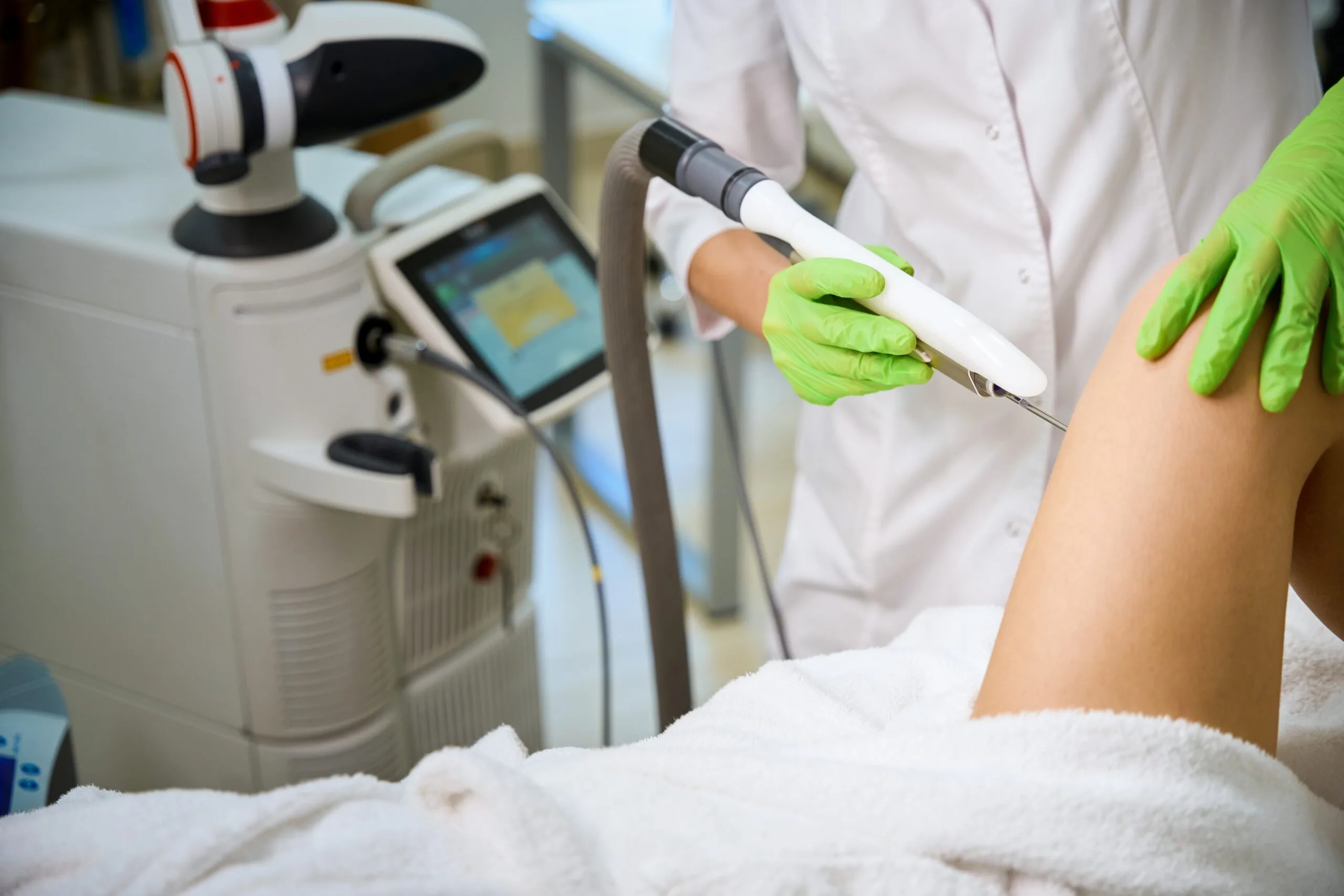
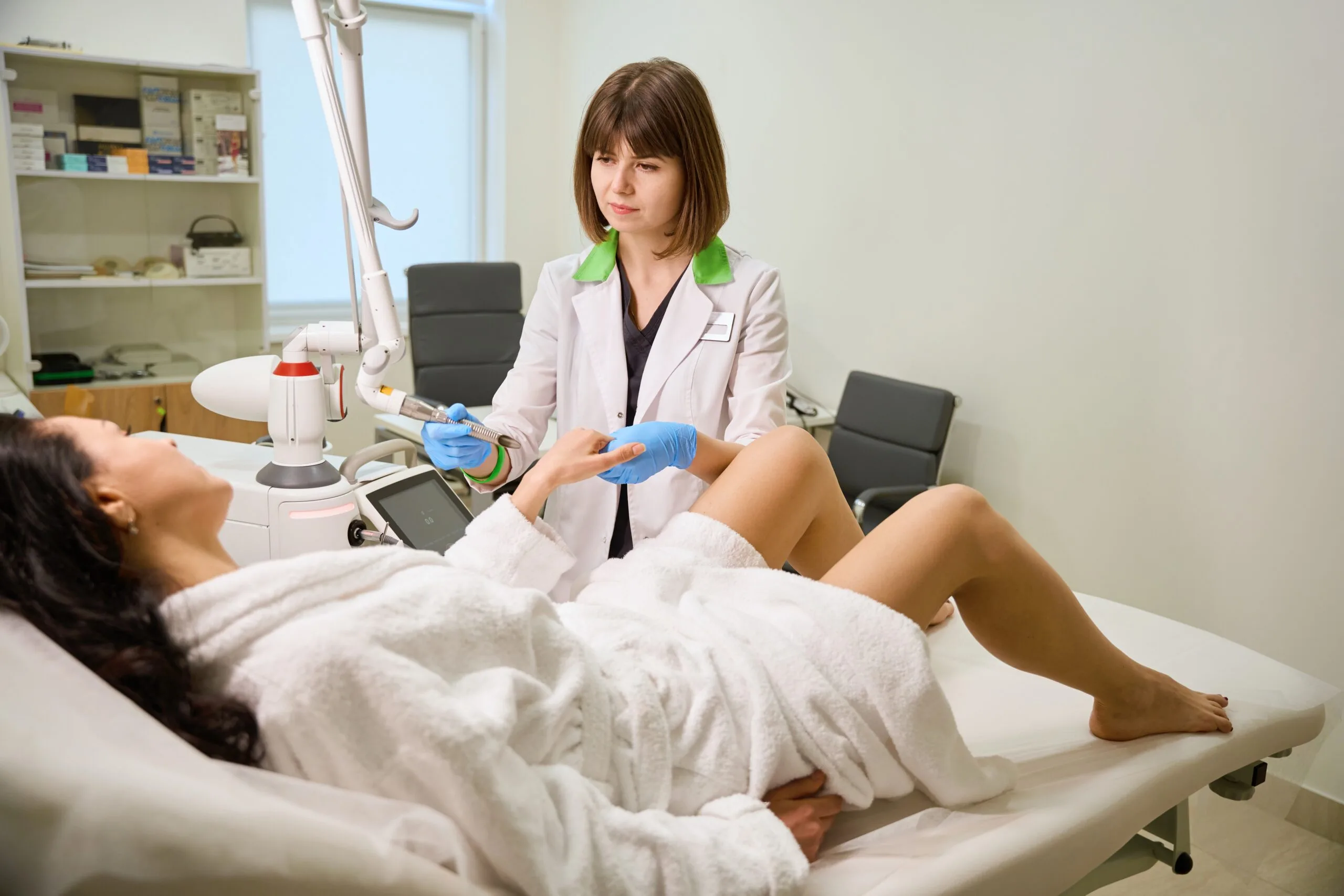
Fractional CO2 laser: renewing the surface. The CO2 laser makes thousands of microscopic, evenly spaced treatment points in the vaginal lining, leaving the tissue between them untouched. Your body’s repair response does the rest: a thicker, healthier lining, new collagen, more blood flow, and better natural moisture. It’s the workhorse for thin, dry, easily irritated tissue.
1470nm diode laser: supporting the deeper tissue. The diode’s light is absorbed by water, so instead of working on the surface, it gently heats the tissue underneath without wounding the lining. That heat stimulates collagen and blood flow in the deeper, supportive layers. It’s gentler, with no surface treatment points to heal.
Most clinics own one laser and treat it as the answer to everything. We use both, alternating them across a treatment series, with the goal of harnessing the strengths of each: CO2 renewing the surface lining, and the diode supporting the tissue underneath. Alternating also gives the lining time to recover between CO2 sessions.
Laser is also usually one part of a bigger plan, not the whole plan. Many women do best combining it with vaginal estrogen or prasterone, pelvic floor therapy, or other treatments, and those approaches may add to each other. We’ll build the combination that fits you.
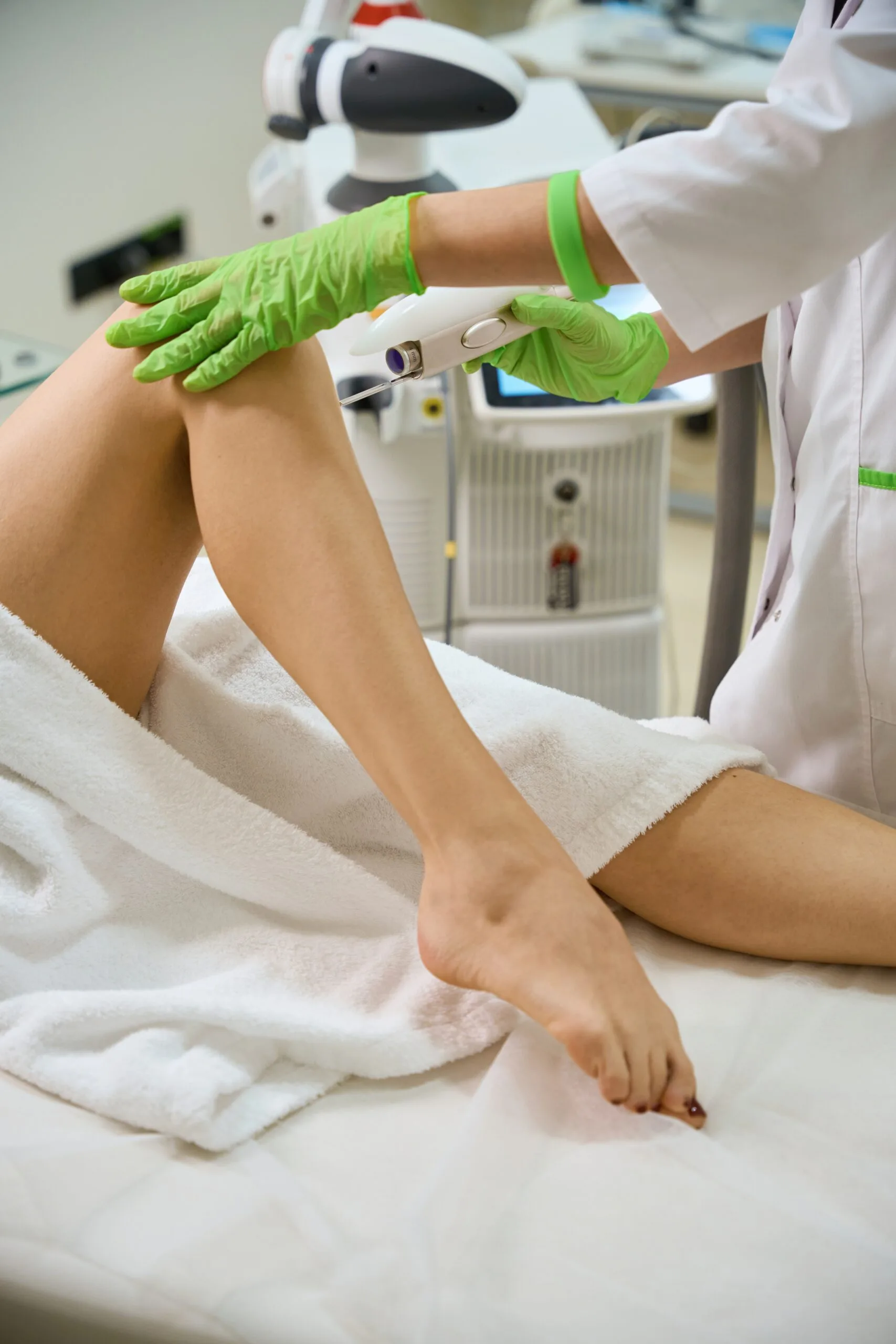
Every laser plan starts with a full evaluation and exam. We look at your symptoms, your history (including any cancer history and current medications), and the health of the tissue, and we check for things that would make laser a bad idea right now, like an active infection, unexplained bleeding, or pregnancy.
We’ll talk through whether laser fits your situation, what the evidence shows, the risks and the benefits, and how it compares to your other options. Vaginal laser treatment is an off-label use of FDA-cleared devices, and we’ll explain what that means. Some women are great candidates, some are better served by something else first, and we’ll tell you which you are.
You’ll get specific instructions before each session, including when to pause sex and anything to stop or start beforehand.
Plan on about an hour per visit, and most of that is waiting for numbing cream to do its job. The treatment itself is much shorter. A slim, smooth probe is placed in the vagina, and the laser does its work from there.
With the CO2 laser, most women feel warmth and a light snapping or tingling. The diode feels like gentle, spreading warmth. Most women describe it as odd rather than painful, and you can tell us to pause at any point.
Mild warmth, swelling, or sensitivity is common for a day or so. Most women go right back to normal daily activities.
You’ll need to skip sex, tampons, and intense exercise for a short period after each session. We’ll give you exact instructions for your treatment plan.
Light spotting and extra discharge for a few days are common. Less often, women have temporary pain or irritation. Rarely, laser treatment can cause burns, scarring, or ongoing pain, which is one more reason we take candidate selection and settings seriously. If anything feels off, call us.
Results build over the series and fade gradually over time, so most women come back for a maintenance treatment about once a year.
Many women notice changes within a few weeks of their first treatments, and improvement continues across the series as the tissue rebuilds. Full results usually show up one to three months after the final session, and maintenance treatments help keep them going.
Results vary. Your plan and expectations will be based on your own evaluation.

Vaginal laser research has had a bumpy history. Early studies were mixed, and the technology got ahead of the evidence, especially with clinics promising things lasers can’t deliver. Since then, the research has gotten better. Head-to-head randomized trials have found that CO2 laser produced improvement in dryness, painful sex, and related symptoms comparable to vaginal estrogen, the long-standing gold standard.
That’s genuinely promising, and there’s still more to learn, including how laser works best alongside other treatments. Our job is to give you an honest read on where you fit: the likely benefits, the risks, the alternatives, and whether laser makes sense for you at all.
We’re a cash-pay clinic, so there are no surprise insurance bills.
You’ll get a clear quote after your consultation, before anything starts.
Your care is led by Dr. Jake Shank, a board-certified physician and Menopause Society Certified Practitioner. Laser is one tool in a menopause and pelvic health practice, not the only thing we sell.
Our treatment protocols are built from the published research, and we independently test and verify our lasers’ output. It’s not glamorous, but it’s the kind of thing you’d want someone to be obsessive about.
Most women describe it as warm, tingly, and odd rather than painful, especially with numbing cream. You can ask us to pause at any time.
Often, yes. Laser doesn’t use hormones, which is a big part of why it matters for survivors. We’ll review your history and coordinate with your oncologist.
We don’t promise that, and you should be skeptical of anyone who does. The FDA has warned against marketing lasers for vaginal “tightening” or “rejuvenation.” We use laser to improve the health of the tissue, and we’ll talk honestly about what it can and can’t do.
Usually, yes, and many women do best with both. Laser is often one part of a bigger plan.
Results fade gradually, so most women do a maintenance treatment about once a year. We’ll track how you’re doing and recommend maintenance when it makes sense.
Book a consultation and bring your questions, even the awkward ones. Especially the awkward ones.
